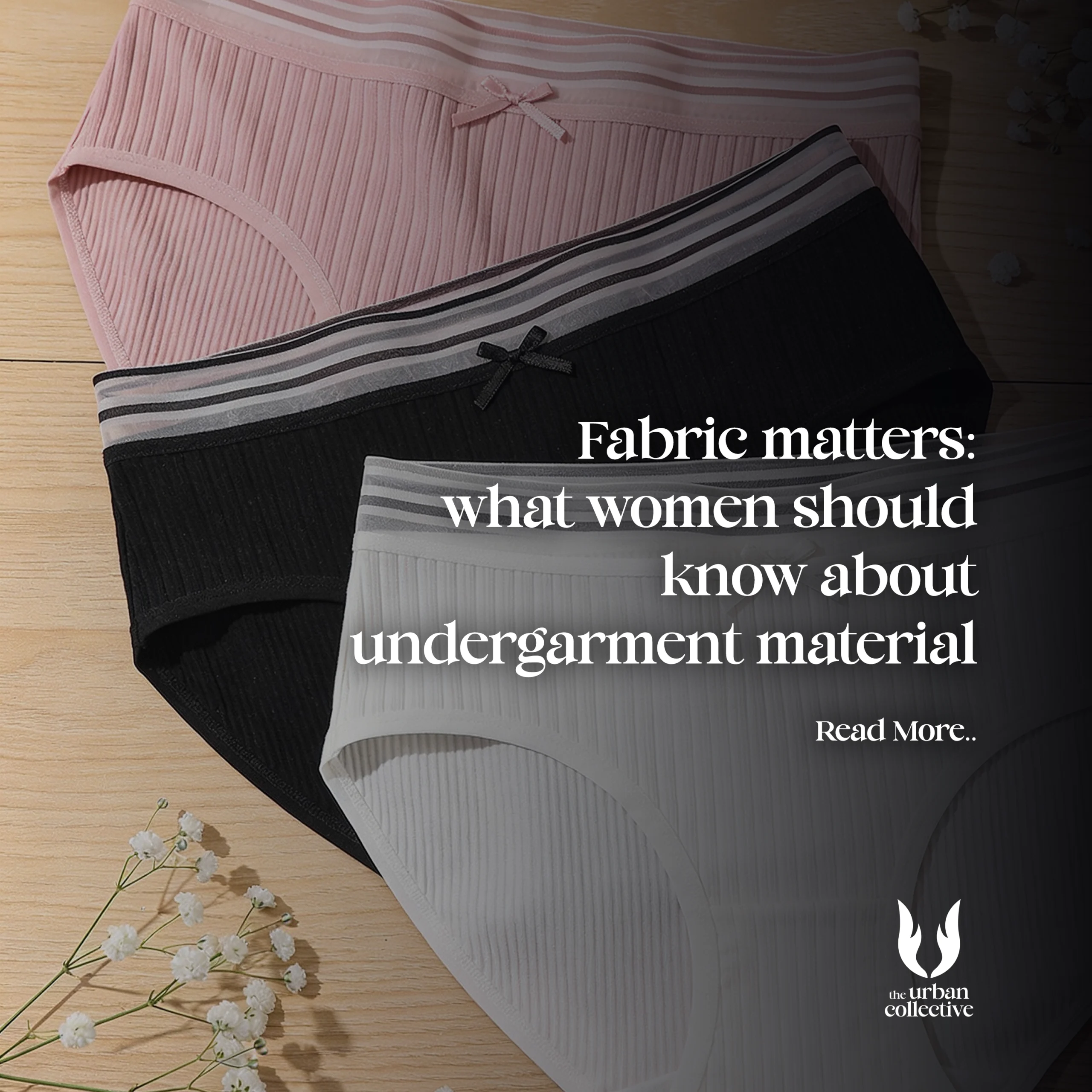
In the intimate apparel industry, fabric selection is one of the most critical determinants of garment performance. The right material impacts breathability, support, elasticity, moisture regulation, and long-term durability. As women increasingly prioritize comfort and skin health, understanding fabric technology has become essential not just for brands, but for consumers seeking functional, high-quality essentials.
This guide provides a professional, material focused overview designed to help women make more informed decisions when selecting daily undergarments.
1.Cotton- The Standard for Breathability and Skin Health
Key Attributes,
• Natural cellulose fiber
• High moisture absorption rate
• Naturally hypoallergenic
• Resistant to heat and frequent washing
Cotton’s ability to regulate temperature makes it the most recommended fabric for daily underwear, especially in warm and humid climates. For women with sensitive skin or recurring irritation, cotton offers unmatched comfort with minimal friction.
2.Microfiber- Engineered for Smoothness and Precision Fit
Key Attributes,
• Ultra-fine synthetic fibers (polyamide/polyester blends)
• Lightweight with a smooth, silk like finish
• Excellent shape retention
• Quick drying with low moisture absorption
Microfiber is often used in T-shirt bras and seamless underwear because of its ability to create an invisible, second skin effect. Its engineered smoothness makes it ideal for professional attire and fitted silhouettes.
3.Lace- Modern Innovation Beyond Aesthetics
Key Attributes,
• Constructed using nylon, elastane, or microfiber threads
• Available in varied densities
• Moderate breathability depending on weave
Contemporary lace incorporates stretch fibers that provide greater softness and improved structural integrity. This transition from traditional rigid lace to technical stretch lace makes it wearable for longer hours while maintaining aesthetic appeal.
4.Spandex (Elastane) The Foundation of Fit and Flexibility
Key Attributes,
• Exceptional elasticity with strong recovery
• Typically used in 5 to15% blends
• Enhances garment adaptability
Spandex is essential in bras, sportswear, and shapewear due to its stability and resilience. It ensures that undergarments maintain their shape over time, even with repeated stretching and wash cycles.
5.Understanding Breathability
Key Indicators,
• Fiber permeability
• Fabric weave density
• Moisture management properties
Breathability is crucial for women living in tropical regions or experiencing high daily movement. Poorly ventilated fabrics trap moisture and heat, increasing the risk of irritation and bacterial growth. Fabrics such as bamboo, modal, and cotton blends excel in this category.
6.Durability- A Measure of Long-Term Performance
Key Indicators
• Tensile strength
• Elastic recovery
• Resistance to pilling and color fading
Durable fabrics maintain structural support, especially in bras, where fiber stability directly affects comfort and fit. High quality elastics, reinforced stitching, and stable fiber blends significantly extend garment lifespan.
7.Fabric and Skin Sensitivity- A Critical Health Consideration
Key Indicators,
• Chemical finishing processes
• Dye quality and residue levels
• Surface texture and friction
Women with sensitive or reactive skin benefit most from fabrics that minimize friction and allow natural airflow. Materials with soft finishes, smooth surfaces, and low moisture retention help reduce irritation throughout the day. Prioritizing breathable, lightweight textiles ensures comfort during long wear and lowers the likelihood of redness or discomfort in delicate areas.
The Evolution of Undergarment Material Technology
Advancements in textile engineering have transformed the lingerie landscape. Modern undergarments now incorporate moisture-wicking yarns, temperature-regulating fibers, anti-microbial finishes, and smart blends designed to balance comfort with performance. Brands focusing on technical fabric innovation consistently deliver better fit, better skin compatibility, and superior durability. For consumers, understandingThese materials enable more strategic purchasing, prioritizing quality, longevity, and skin health over short-term trends.
Conclusion
Fabric is not merely a design element; it is the foundation of comfort, hygiene, and confidence. By recognizing how different fibers behave, women can choose undergarments that genuinely support their lifestyle, climate, and skin needs. Investing in the right fabric is ultimately an investment in daily well-being.